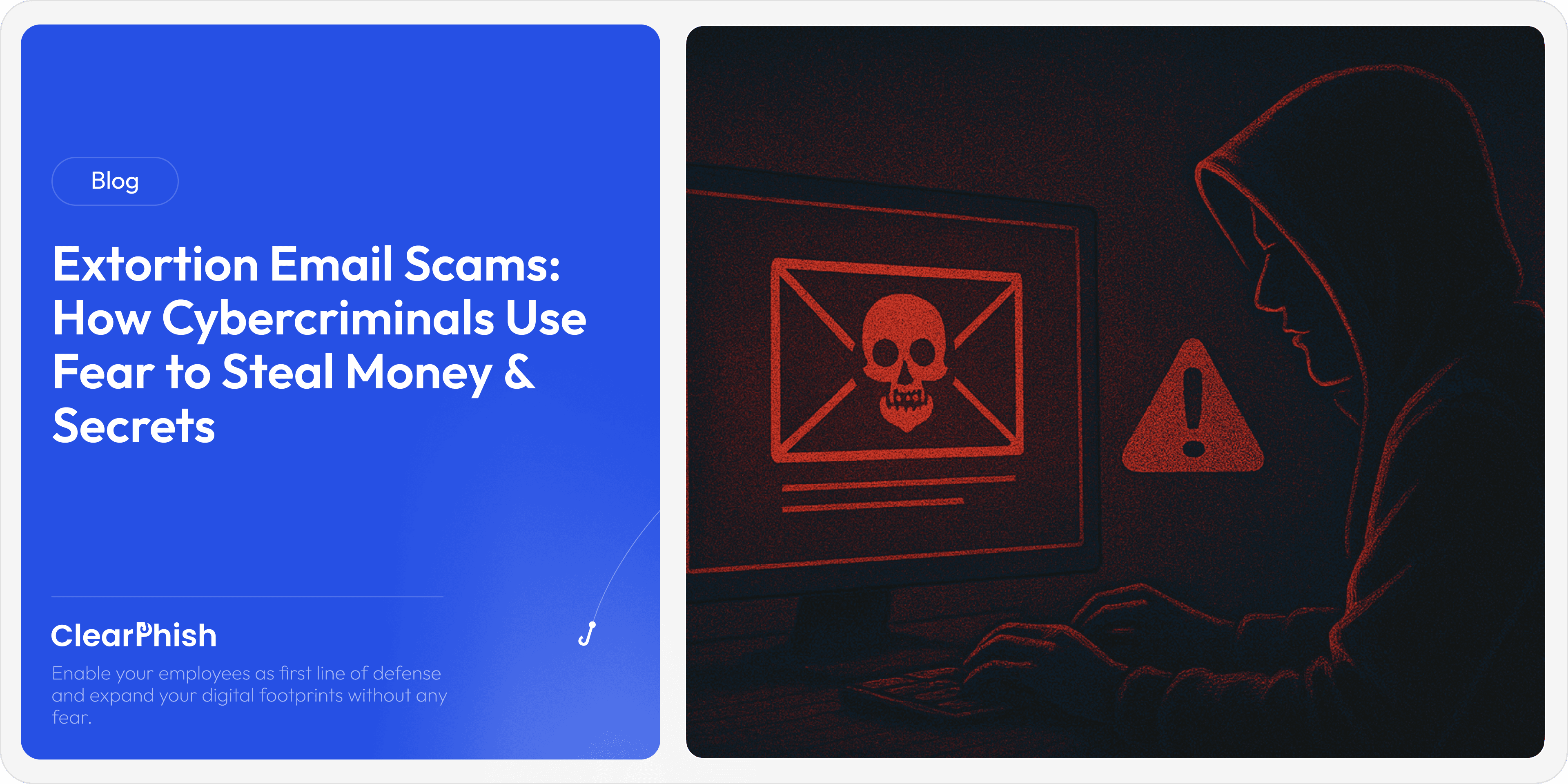
Extortion Email Scams: How Cybercriminals Use Fear to Steal Money & Secrets
Author :
Deepak Saini
Dec 10, 2025
Cybercriminals have mastered the art of fear.
Among the many social engineering threats businesses and individuals face today, extortion email scams stand out as one of the most psychologically manipulative. These scams prey not on technical vulnerabilities, but on human emotions — especially fear, shame, and urgency.
Over the last decade, extortion emails have evolved from crude threats to highly sophisticated operations. They increasingly leverage stolen personal data, dark web intelligence, AI-generated content, and deep-fake capabilities to create a terrifying sense of legitimacy.
This article breaks down how these attacks operate, examines real-world incidents, and provides expert guidance on what to do if you or your organization is targeted.
What is an Extortion Email Scam?
Extortion email scams are fraudulent messages in which attackers demand money (usually cryptocurrency) in exchange for not releasing allegedly compromising information — real or fabricated.
The goal isn’t technical exploitation. The goal is psychological manipulation.
Typical claims include:
“We hacked your webcam while you visited adult websites.”
“We have sensitive files from your computer.”
“We have access to your company’s network — pay or we leak it.”
“We know your passwords and will expose personal secrets.”
The scammer may include:
A leaked password from past breaches
Your phone number or email signatures
Real-world location data
Workplace details
This information is often sourced from publicly available data, credential dumps, or AI-driven OSINT (Open-Source Intelligence).
When combined with a threatening narrative, even security-aware users may panic.
Real World Examples of Extortion Email Scams
The “Sextortion” Cryptocurrency Campaign
Between 2018–2022, cybersecurity firms tracked a massive sextortion wave where attackers emailed users old passwords leaked from breaches like LinkedIn or Dropbox. The email claimed:
“I recorded you with your webcam during inappropriate activity. Pay $1,200 in Bitcoin or the footage goes public.”
Analysis later confirmed no systems were actually compromised — but the fear worked. Millions were paid globally.
CEO & Executive Threat Emails
Cybercrime groups increasingly target corporate leaders:
“We hacked your CEO’s inbox. We have confidential financial documents. Pay us or we leak this to shareholders.”
Even if the attackers have nothing, businesses fear reputational loss — and some quietly comply.
Ransomware Without the Ransomware
A more modern variation: criminals claim responsibility for a “data breach” that never happened.
Some even spoof official security tools (like antivirus alerts) to appear credible.
If the organization is already dealing with cybersecurity anxiety, paying seems like the easiest way out.
Why These Scams Work: The Psychology Behind It
Extortion emails succeed because attackers:
✔ Create urgency — short deadlines, countdown timers
✔ Use technical language to sound credible
✔ Leverage shame around sensitive topics
✔ Borrow real personal data to build trust
✔ Threaten public exposure — still one of humanity’s greatest fears
Victims often think:
“What if this is real? The risk is too high — I just need this to go away.”
In cybersecurity, emotion overrides logic far more often than we’d like to admit.
Technical Tactics Used in Modern Extortion Scams
Cybercriminals are leveling up. These are the top techniques:
Technique | Purpose |
|---|---|
Data breaches & credential dumps | Provide real passwords as “proof” |
Email spoofing | Make the message appear from the target’s own inbox |
IP-logging trackers | Trick victims into thinking attackers know their location |
Malware claims | Bluffing about hacked webcams or microphones |
Generative AI | Creating convincing emails at scale |
Cryptocurrency wallets | Providing untraceable payment channels |
In many cases, the attacker never touched the victim’s devices — they just exploited publicly available data and fear.
Who Is Most at Risk?
While anyone can be targeted, high-value groups include:
Employees with access to financial data
Executives and public-facing professionals
Individuals with strong social media presence
People vulnerable to personal embarrassment
Attackers cast wide nets through automated spam campaigns, then focus pressure on victims who respond emotionally.
Business Risk & Legal Implications
For organizations, extortion emails aren’t merely a nuisance — they can lead to:
Productivity disruption
Internal panic and misinformation
Premature reporting obligations
Loss of stakeholder confidence
Financial and reputational damage
A key operational mistake is when employees don’t report the message internally due to embarrassment — allowing attacks to escalate unmonitored.
A mature security culture must remove stigma from incident reporting.
How to Respond If You Receive an Extortion Email
Do NOT respond or pay
Paying encourages repeat attacks and does not guarantee silence.Stay calm — assume it’s a bluff
In 95%+ of cases, attackers do not have real compromising data.Verify “proof”
Passwords included are usually from old breaches. Search them on Have I Been Pwned and reset all reused passwords.Do not click any links or open attachments
Scammers may combine extortion with malware delivery.Report it to the right parties
Corporate: Security or IT team (forward with headers)
Personal: Email provider + local cybercrime authorities
Document everything
Screenshots, payment demands, timestamps — helpful for investigation.Strengthen your baseline security
Enable MFA on all accounts
Patch systems and browsers
Use antivirus and secure DNS
Implement strong password hygiene policies
Strong security posture diminishes the attacker’s leverage.
What Companies Must Do to Prevent Damage
Organizations need a proactive operational strategy:
Create a zero-shame incident reporting culture
Employees must feel comfortable notifying security teams immediately.Awareness Training
Simulations and education about real extortion case studies reduce panic.External Communications Plan
Pre-approved messaging prevents chaos if an extortion claim becomes public.Monitoring of Credential Exposure
Tools that track employee identity data leaks allow faster mitigation.Legal & Compliance Coordination
Teams must know when threats cross into regulated breach territory.
Cyber resilience isn’t only technical — it’s operational and psychological.
The Future of Extortion Scams
Emerging trends suggest an alarming direction:
AI Deepfake Blackmail
Fabricated “explicit” videos generated from a user’s social media photos.Corporate Intelligence Extortion
Attackers scrape data from Slack leaks, GitHub commits, and dark web chatter for targeted threats.Subscription-Based Extortion
Cybercrime-as-a-Service operators selling automated extortion campaigns.Large-Language-Model Social Engineering
AI-crafted emails matching a victim’s profession, writing style, or mental state.
The threat landscape is moving quickly — and becoming more personal.
Final Thoughts
Extortion email scams are brutal not because they threaten data…
…but because they target our fear of exposure.
As cybersecurity professionals, we must recognize the emotional component. Technology defenses are critical — but empowering people with confidence, knowledge, and a stigma-free reporting culture is what truly undermines these scams.
Criminals don’t need to hack your network if they can hack your mind.
Security leaders must stay vigilant, stay empathetic, and build resilience beyond firewalls — resilience in human behavior itself.